

Understanding Vitiligo: A Simple Guide
- Reena Majithia
- Oct 30, 2024
- 3 min read

Updated: Nov 2, 2024
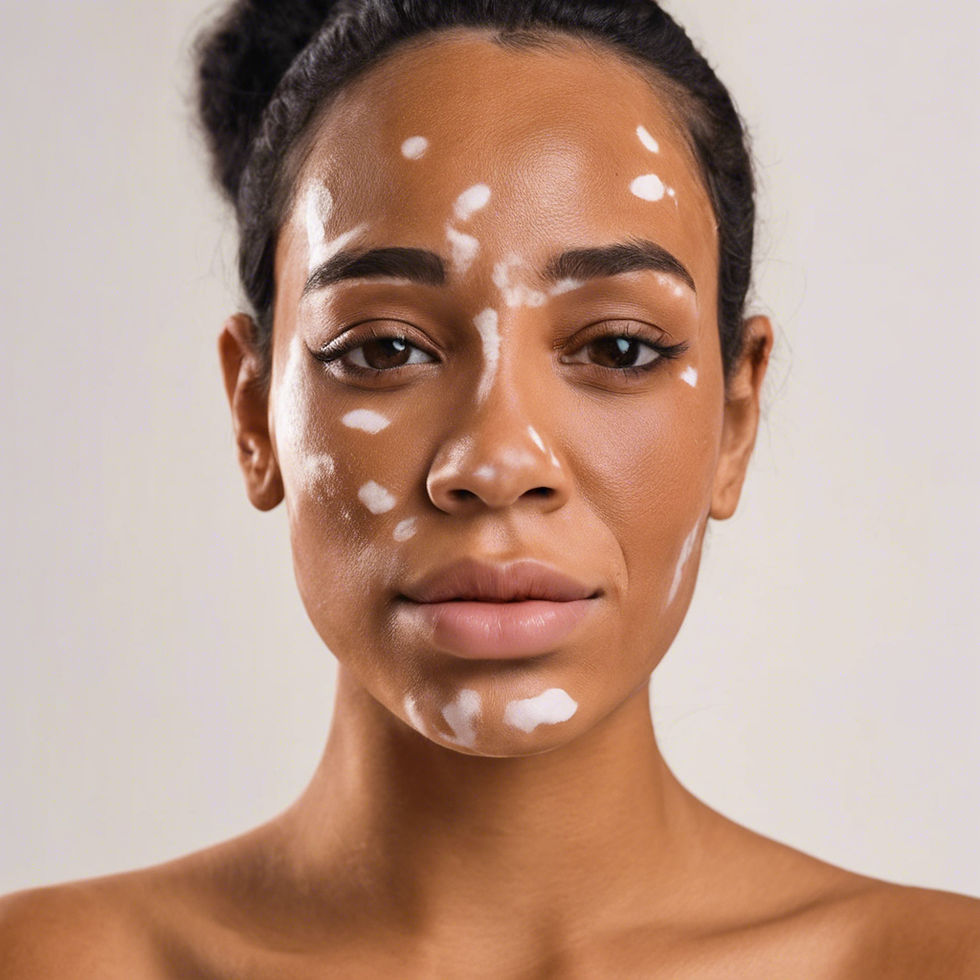
Vitiligo is a skin condition that causes patches of skin to lose their color. This happens because the cells that make skin pigment, called melanocytes, get damaged or destroyed. As a result, you may see white patches on your skin. These patches can appear anywhere, but they often show up on the face, neck, hands, and in skin folds.
Symptoms of Vitiligo:
The main sign of vitiligo is the appearance of lighter patches on your skin. Here’s what you might notice:
White Patches: Light spots that can vary in size.
Symmetrical Appearance: Patches may appear on both sides of your body, like on both hands or both knees.
What Causes Vitiligo?
Doctors aren’t completely sure what causes vitiligo, but there are a few things that might play a role:
Immune System Issues: Your immune system might mistakenly attack the cells that make skin color.
Genetics: If someone in your family has vitiligo, you might be at a higher risk.
Stress and Sun Exposure: These factors could trigger the condition in some people.
Types of Vitiligo:
There are different types of vitiligo, and knowing which type you have can help with treatment:
Non-Segmental Vitiligo: This is the most common type. Patches appear on both sides of your body and may slowly spread over time.
Segmental Vitiligo: This type affects only one side of the body and usually stabilizes within 6 to 12 months without new patches developing.
Mixed Vitiligo: A rare type where both segmental and generalized patches occur.
Treatment Options:
While there’s no cure for vitiligo, there are treatments that can help:
Topical Creams: Some creams can help restore color to the skin.
Light Therapy: Special light treatments may encourage pigment to return.
Surgery: In certain cases, skin grafts or other surgical options may be recommended.
Oral Immunosuppressant Medications: For some individuals, doctors may prescribe oral immunosuppressants for a short duration to help control disease activity. However, for stable and localized vitiligo, these medications are generally not necessary.
Makeup: Many people use makeup to cover white patches and feel more confident.
Risk Factors:
You might be more likely to get vitiligo if:
Family History: If someone in your family has it, you might too.
Other Autoimmune Diseases: Conditions like diabetes or thyroid problems can increase your risk.
Safety Precautions:
Since the lighter skin is more sensitive to the sun, protecting it is very important:
Use Sunscreen: Apply sunscreen with an SPF of 30 or higher to all exposed skin.
Seek Shade: Try to stay out of direct sunlight, especially during peak hours.
Wear Protective Clothing: Light, long-sleeved clothing can help shield your skin from the sun.
Living with Vitiligo:
Vitiligo is not dangerous or contagious, but it can affect how you feel about yourself. Many people find support in community groups or counseling. If you notice white patches on your skin, it’s a good idea to see a dermatologist. Early treatment is usually more effective, so don’t hesitate to ask for help!
Conclusion:
Vitiligo can be tough to deal with, but knowing about its symptoms, causes, and treatment options can help you manage it better. With the right care and support, you can live confidently with vitiligo.
Related links:
Related Reels:


Comments